Chasing Safety in a High-Stakes World: My Quest for the Best Low-Risk Trading Platforms
I still remember the sinking feeling in my stomach when I lost my first tiny trading account. It wasn’t a massive fortune, but it was mine. That night, I realized a brutal truth about this industry: most beginners fail not because they lack passion, but because they dive into high-risk environments without a life jacket. If you are tired of the constant stress, you need a different approach. You need to focus on capital preservation and platforms engineered to support sustainable, controlled growth.
Finding the right home for your money is a personal journey. Over the past few months, I have treated my trading like a meticulous science experiment. I wanted to see which platforms genuinely offer features that mitigate risk for everyday retail traders. Here is my honest, first-person breakdown of the top low-risk options I tested, detailing what worked, what fell short, and how you can protect your hard-earned capital.
Why Platform Infrastructure Matters More Than Strategy
When I first started out, I mistakenly believed that a magical technical analysis strategy would save me. I spent endless hours drawing lines on charts, completely ignoring the structural reality of the broker I was using. The truth is that your platform choice sets the hard ceiling for your risk management potential.
If a platform suffers from high slippage, freezes during volatile news events, or forces you into massive minimum trade sizes, even the best strategy will lose money. I quickly learned that I needed to find environments with low financial barriers to entry, highly transparent pricing structures, and robust built-in risk controls.
Deriv: The King of Controlled Risk and Synthetic Flexibility
My journey led me to look deeply at platforms that handle market volatility differently. That is when I spent significant time analyzing Deriv. What makes this platform stand out for a risk-conscious trader is its unique structural offering, specifically its proprietary synthetic indices.
Synthetic indices mimic real-world market movements but are completely unaffected by sudden, unpredictable global news events or geopolitical shocks. For a beginner, this is a massive advantage. You do not have to worry about waking up to a massive market gap that blows past your stop-loss because an unexpected economic report dropped overnight.
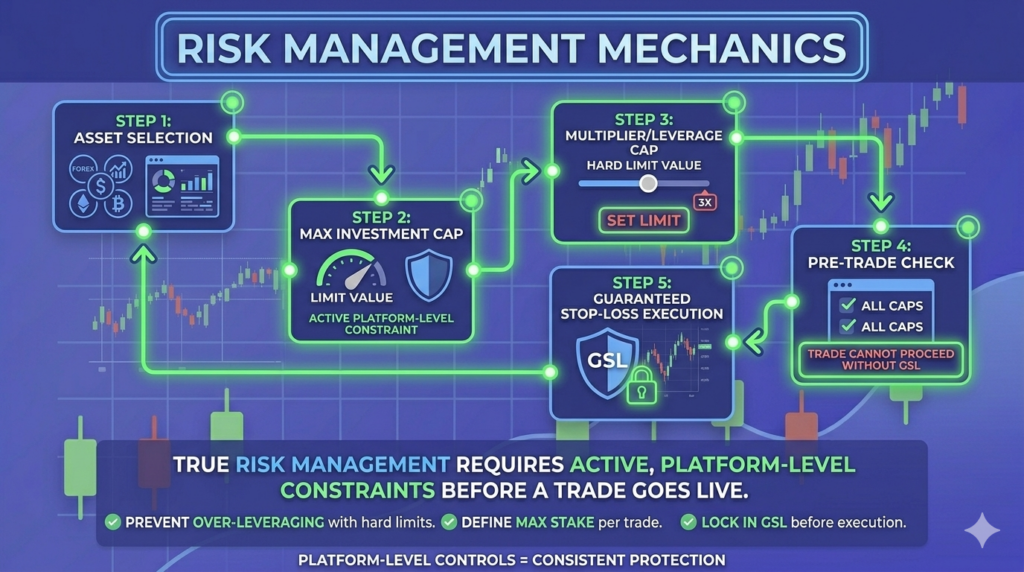
When comparing how different environments treat small balances, looking at Deriv vs IQ Option for beginners in 2026 reveals distinct structural paths. Deriv allows you to trade with incredibly micro-lot sizes on their MT5 interface, giving you absolute control over your precise monetary risk per point. Furthermore, their multipliers feature functions beautifully as a safer alternative to traditional high-leverage trading. It gives you the upside potential of leverage while strictly capping your downside risk to your initial stake.
I found the platform interface highly reliable, even when testing it on mobile networks. If you want an environment where you can meticulously map out your risk variables before risking a single cent, you can start your journey by visiting the Deriv Official Registration Page.
IQ Option: The Standard for Precision Charting and Visual Clarity
Next, I moved my testing over to IQ Option. If you are visual, the way a chart presents information impacts your psychological comfort level while managing a live trade. When I first loaded the interface, I immediately noticed why it remains a massive favorite globally. The platform provides an incredibly clean, intuitive charting experience that makes identifying historical support and resistance levels straightforward.
For low-risk execution, identifying these precise structural areas on a chart is everything. It is the core foundation for anyone attempting to learn price action trading safely. If you cannot clearly see where institutional buyers have stepped in historically, you are essentially flying blind.
IQ Option makes it incredibly simple to set visible stop-loss and take-profit targets directly on the screen with a single click. Seeing exactly where your trade will automatically close if the market moves against you builds an immense amount of discipline. It removes the temptation to hold on to a losing position in the toxic hope that it will eventually turn around.
The entry barrier is also remarkably low, making it an excellent playground for testing strategies without risking significant capital. If you want to experience an incredibly refined visual ecosystem, you can set up an account through the IQ Option Premium Registration.
Binomo: Streamlined Simplicity for Fast Decision Making
After spending days analyzing complex charts, I wanted to test something on the opposite end of the spectrum: absolute simplicity. That search brought me to Binomo. For a long time, I struggled with analysis paralysis, a state where you have so many indicators and tools on your screen that you get completely terrified to take a trade.
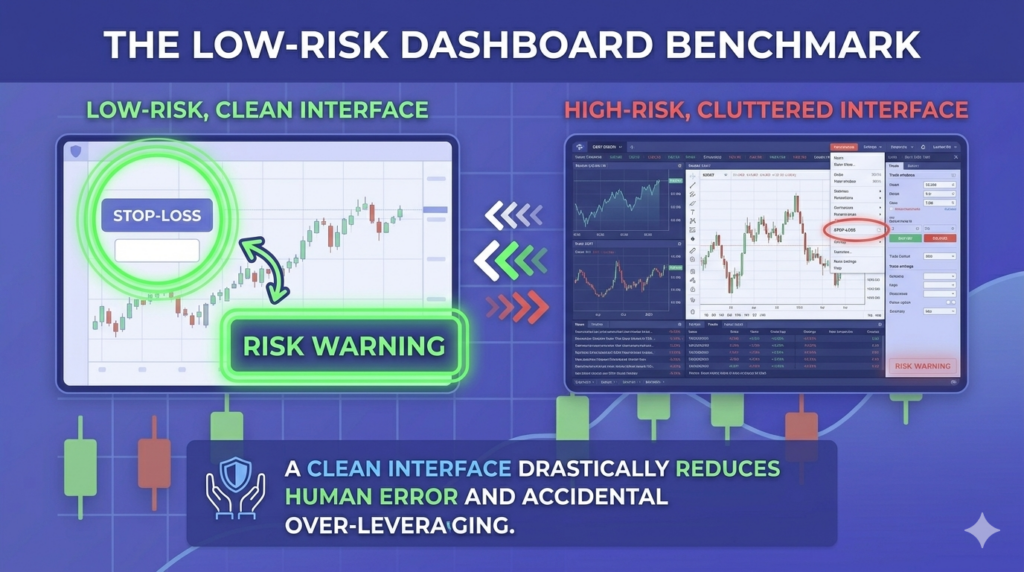
Binomo solves this problem by paring down the trading experience to its absolute essentials. The interface is clean, uncluttered, and stripped of distracting noise. This simplified environment makes it an interesting option for individuals who find traditional trading dashboards overwhelming.
When evaluating these platforms for smaller accounts, I frequently look at how they manage basic usability and trading mechanics. Simplicity reduces execution mistakes, which are a massive, hidden driver of retail capital loss. For a highly detailed breakdown of how these two simple ecosystems face off across various small-account metrics, you can read my exhaustive comparison on Binomo vs IQ Option for small accounts.
Alternative Platforms I Evaluated During My Testing
While Deriv, IQ Option, and Binomo formed the core of my testing rotation, I also explored several other notable brokers in the space to see if they offered unique safety features or distinct advantages for risk management.
- Pocket Option: Known for its extensive asset catalog and robust social trading features, it provides an interesting space for watching how experienced traders manage their risk profiles in real-time. You can explore their interface directly on the Pocket Option Sign-Up Portal.
- Quotex: This broker has gained massive traction for its highly responsive, no-lag charting interface, which is vital for precise trade entries where a few seconds can change your risk exposure. You can take a closer look via the Quotex Fast Registration Link.
- ExpertOption: Offers a highly streamlined mobile execution system and a great dedicated demo environment for practicing risk preservation strategies without financial pressure. Check out their setup at the ExpertOption Registration Page.
- Olymp Trade: Provides a wealth of educational pathways and built-in analytical tools tailored toward slowly scaling small accounts with low minimum parameters. You can visit the Olymp Trade Portal to inspect their built-in tools.
- Capital Core: An interesting emerging platform that offers crisp order execution speeds and transparent tracking metrics for analytical traders. You can register and review their operational parameters at the Capital Core Member Area.
My Tactical Blueprint for Keeping Risk Extensively Low
Choosing a platform is only the first half of the battle. The real magic happens in how you behave once you log into that platform. Over my years of making mistakes, I have developed a rigid internal framework that keeps my capital safe regardless of which platform I am using.
First, I treat my demo account as a sacred training ground, not a game. Most people use demo accounts to take massive, unrealistic risks because the money isn’t real. When they switch to a real account, they instantly blow it. You must trade on your demo account with the exact same dollar amounts and risk rules that you plan to use on your real account.
Second, I embraced the power of low minimum deposits to test platform integrity. I never deposit large sums of money into a platform until I have personally verified their deposit flow, execution speed, and withdrawal processing. Starting small allows you to verify the platform’s operational reality with practically zero financial stress.
Third, I stopped trying to catch every single market move. The safest traders I know follow a strict, minimalist routine. They log in, look for one highly specific market structure that matches their rules, take that single trade, and then close the laptop. They do not overtrade, they do not revenge trade, and they do not let emotions dictate their capital allocations.
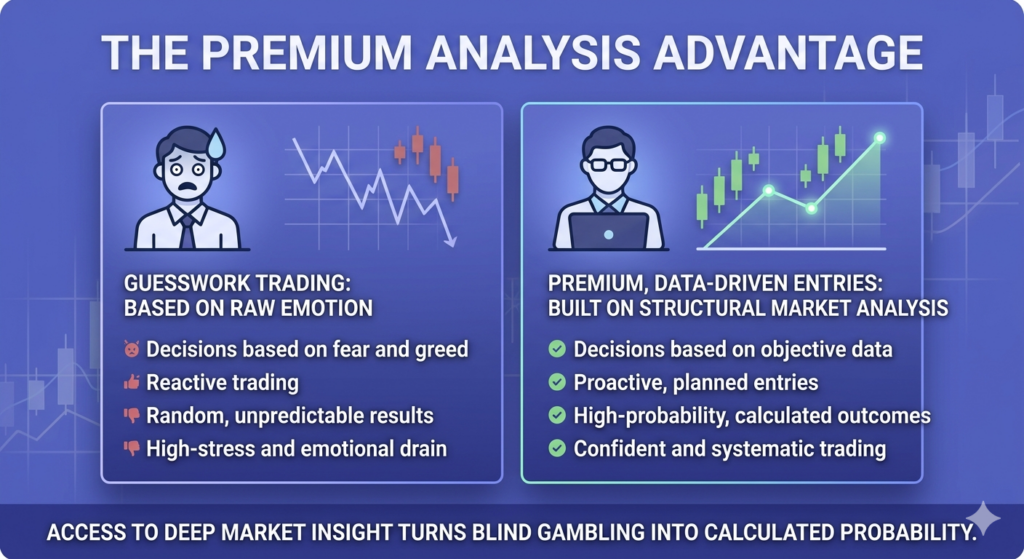
Moving Beyond Guesswork: The Ultimate Edge
If there is one thing my journey has taught me, it is that low-risk trading is not about avoiding losses entirely. It is about making sure that when you do lose, it is a tiny, controlled scratch rather than a fatal wound. The brokers we looked at today provide the physical toolkits to keep you safe, but the ultimate risk management tool is your own knowledge base.
To truly transform your trading from a stressful guessing game into an institutional process, you need deep, structural data analysis that goes far beyond basic retail charting. You need to understand market liquidity, institutional order flow, and underlying macroeconomic structures.
If you are ready to stop trading on pure hope and start building a real, professional edge grounded in institutional analysis, join our community of serious market students. Elevate your approach right now by subscribing to our exclusive framework on the Becoin Premium Membership Portal. Let’s build a sustainable, low-risk career together.
Frequently Asked Questions
What is the absolute safest way to start trading on these platforms?
The safest approach is to utilize the platform’s demo account using the exact same trade sizes you plan to use with real money. Once you switch to live funds, start with a minimal deposit to verify execution and withdrawal speeds under real market conditions before committing significant capital.
Can I completely eliminate risk using built-in platform features?
No, you can never completely eliminate market risk, but you can strictly control it. Features like guaranteed stop-losses, fixed multipliers, and hard caps on your maximum trade stake ensure that your losses are contained to small, predictable amounts.
Why do separate platforms have different minimum trade sizes?
Platforms tailor their infrastructure to different types of traders. Some brokers optimize their systems for fractional contracts or micro-lot sizes to cater to retail beginners, while others keep minimum stakes slightly higher to offset their liquidity provider costs.
How does a clean platform interface reduce my trading risk?
A cluttered, overly complicated interface increases the likelihood of human error—such as mistyping a trade size, failing to see an active stop-loss, or entering a position by accident. Minimalist designs help keep your psychological stress low and your execution precise.
Final Thoughts
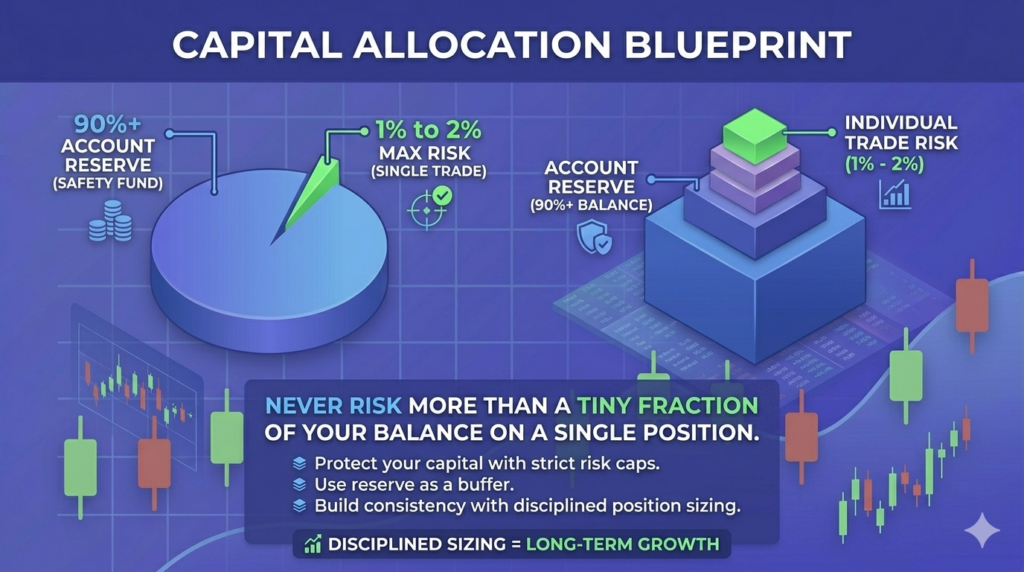
Stepping back and looking at the broader picture, the journey to becoming a consistently profitable trader isn’t about finding a shortcut to massive wealth overnight. It is an exercise in survival. The traders who are still standing years from now aren’t the ones who made the biggest single-day gains; they are the ones who protected their downside so fiercely that the market simply couldn’t kick them out.
Choosing a platform that matches your psychological tolerance for risk, keeping your position sizes remarkably small, and upgrading your market education are the most reliable pillars you can build upon. Treat your trading capital like rare fuel—spend it carefully, protect it constantly, and never let emotion dictate how you use it.
For a practical demonstration of these risk principles across top retail tools, check out this guide on 7 Best Investing Apps For Beginners In 2026. This video provides an overview of the cleanest app ecosystems available to new traders, helping you cross-reference features to minimize simple interface errors.

Deriv vs IQ Option for Beginners in 2026: Which Platform Is Better to Start With?
Choosing your first trading platform can decide whether you stay consistent or quit after blowing your first account. Most beginners do not fail because trading is impossible. They fail because they start on platforms that confuse them, encourage emotional trading, or make risk management difficult. Two names that often appear in beginner discussions are Deriv […]
Top 3 Trading Platforms That Actually Pay (Proof-Based)
Choosing the wrong broker at the start is where most traders fail. Not because they lack strategy but because they end up stuck with slow withdrawals, poor execution, or confusing platforms that break decision flow. If your goal is to find the best trading platform for small deposit or the best broker for beginners, you […]
Deriv vs Binomo for Low-Risk Trading in 2026: Which Platform Is Better for Safer Growth?
Most beginners enter trading with one simple goal: avoid blowing up their account in the first week. That is exactly why low-risk trading matters more than fast profits. Two platforms that constantly appear in beginner discussions are Deriv and Binomo. Both allow small deposits, short-term trading, and beginner-friendly access. But when your focus is protecting […]
Why 90% of Traders Lose Money (Real Reasons Beginners Don’t Realize)
Most Traders Don’t Lose Because of Strategy — They Lose Because of Behavior If you ask most beginners why traders fail, you’ll hear answers like: But after observing thousands of beginner trading behaviors, the truth is much simpler and more uncomfortable: “Most traders lose money because of how they behave, not what they use.” Even […]

The Day I Lost My First Ten Dollars: My Hunt for the Best Mobile Trading App for Beginners
I still remember the exact shape of the cloud outside my window when my first live trade ended in the red. It was a crisp morning, and I was sitting on my couch with a lukewarm cup of coffee, staring at a flashing line on my smartphone screen. I had just deposited ten bucks, convinced […]

The Best Broker Without Complicated Features (And Why Simplicity Wins)
Most traders don’t fail because they lack knowledge. They fail because their platform buries them in noise before they even place their first trade. Here’s what actually works. It Started With a Confession From a $10 Trader A reader messaged us a few months back. He had been trying to trade for three weeks, had […]